Prologue
The previous week’s notes are here
Notes for Week 2
Sharps and Flats
- For major scales that does not start on a
Cnote (i.e. C Major), to follow aTone-Tone-Semitone-Tone-Tone-Tone-Semitonepattern (standard for a major scale), black keys on a keyboard are put to use.Sharp(♯): a semitone higher (sharper) than a noteFlat(♭): a semitone flatter (lower) than a noteE♯is the same asF♭- Scale needs one of each note name
♯and♭symbols are written after each letter note name, or before a note on thestave

Keys and Key Signatures
Convention and noation: marking corresponding ledgers or spaces on a
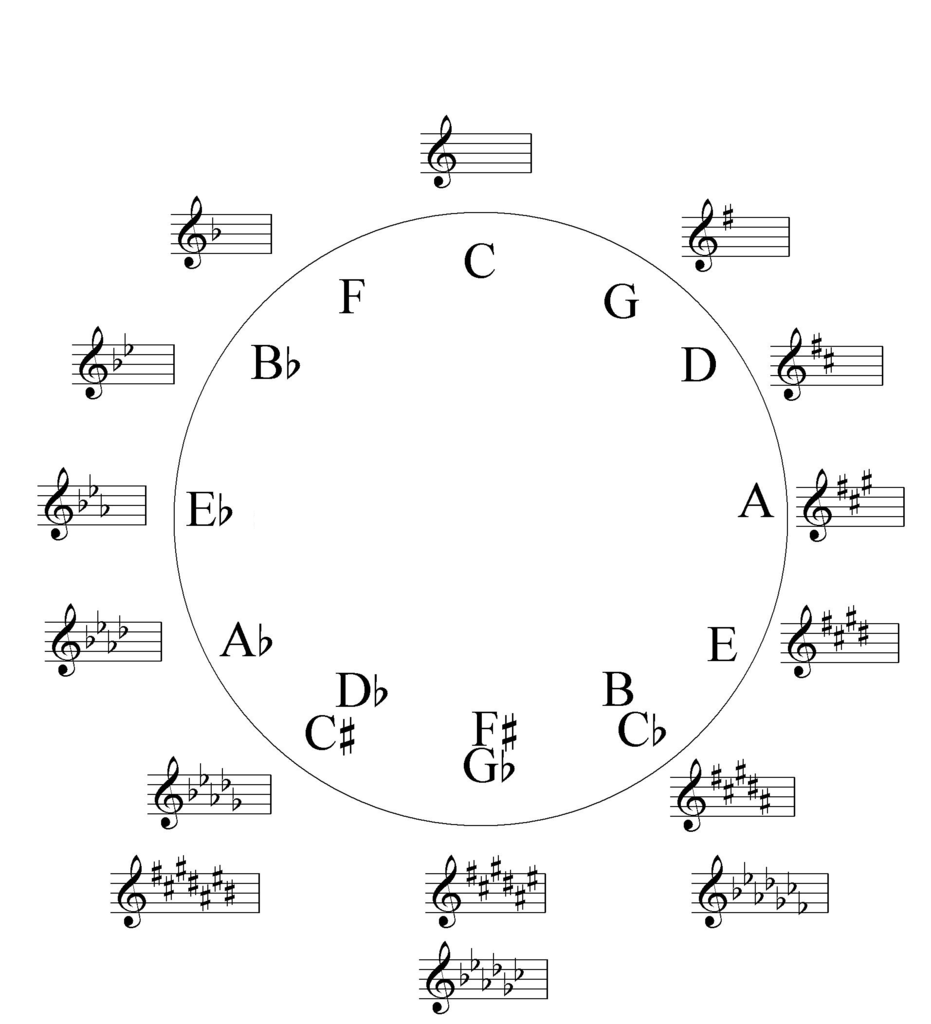
stavewithsharpsandflatsmakes a piece of music on thestaveeasily recognizable in terms of itstonic, known askey signatures.- A
key signaturewill never contain bothflatsandsharps
- A
Each major has a unique signature
Circle of fifths: incrementing clockwise 1 sharp each step

Accidentals: to notes outside the major, accidental
sharpsandflatsneed to be placed in front of notes.- Accidentals are effective for the whole bar, and a
natural(♮) sign needs to be placed in front of the next note of the same name within a bar to cancel out the accidental.
- Accidentals are effective for the whole bar, and a
Minor Keys
- Natural (relative) minor scale: scales toning on the sixth of a major scale
- B natural minor scale has all the notes of D natual major
- Leading note: the seventh note in a scale
- Dominant note: the fifth note (revision)

- Accordingly, the tonic of a relative (natural) major scale is a minor third of a relative minor scale, e.g.
Cis the relative major ofAminor, asCis 3 semitones afterA - Harmonic minor scale: natural minor scale with the seventh note raised 1 semitone

- Melodic minor scale: the ascendant form (sixth and seventh raised 1 semitone) being different from the descendant form (coming down in the natural scale form)




Intervals
Different qualities (starting from the tonic)
- Perfect: unison, fourth, fifth, octave
- Major: second, third, sixth, seventh
- Minor: 1 semitone lower than a major interval
- Augmented: 1 semitone higher than a perfect interval
- Diminished: 1 semitone lower than a perfect interval
Quality of intervals in major scales/keys
| Interval | Quality |
|---|---|
| Unison | Perfect |
| 2nd | Major |
| 3rd | Major |
| 4th | Perfect |
| 5th | Perfect |
| 6th | Major |
| 7th | Major |
| 8ve (Octave) | Perfect |
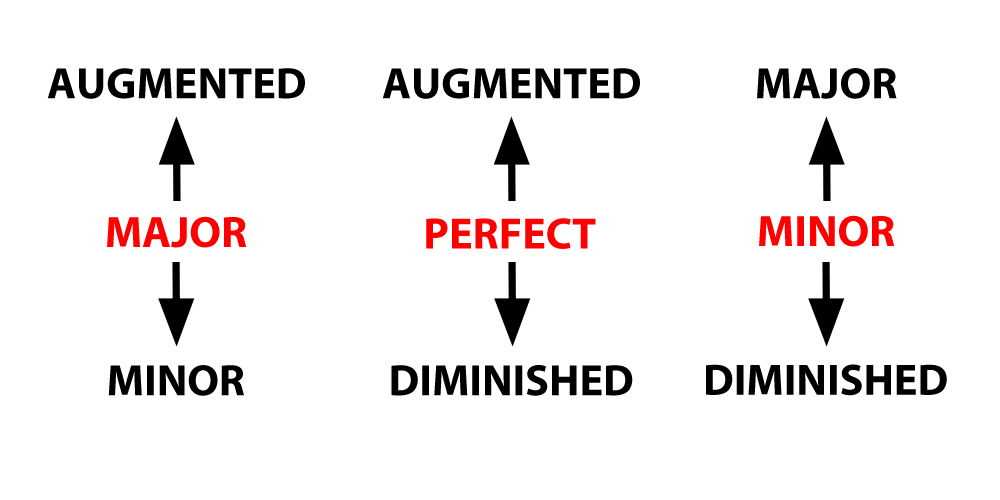
Major interval:
- 1 semitone higher: augmented
- 1 semitone lower: minor
Perfect interval:
- 1 semitone higher: augmented
- 1 semitone lower: diminished
Minor interval:
- 1 semitone higher: major
- 1 semitone lower: diminished

Compound intervals: intervals greater than an octave are related to their simpler equivalents.
- An 11th is a perfect 4th, hence a
compound perfect 4th
- An 11th is a perfect 4th, hence a
Ledger Lines and Clefs
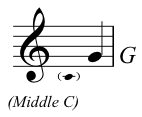
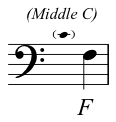
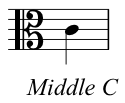
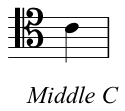
- Clefs are used to indicate which range of pitches the standard stave lines and spaces should represent
- Four major clefs:
- Treble

- Bass

- Alto

- Tenor

- Treble
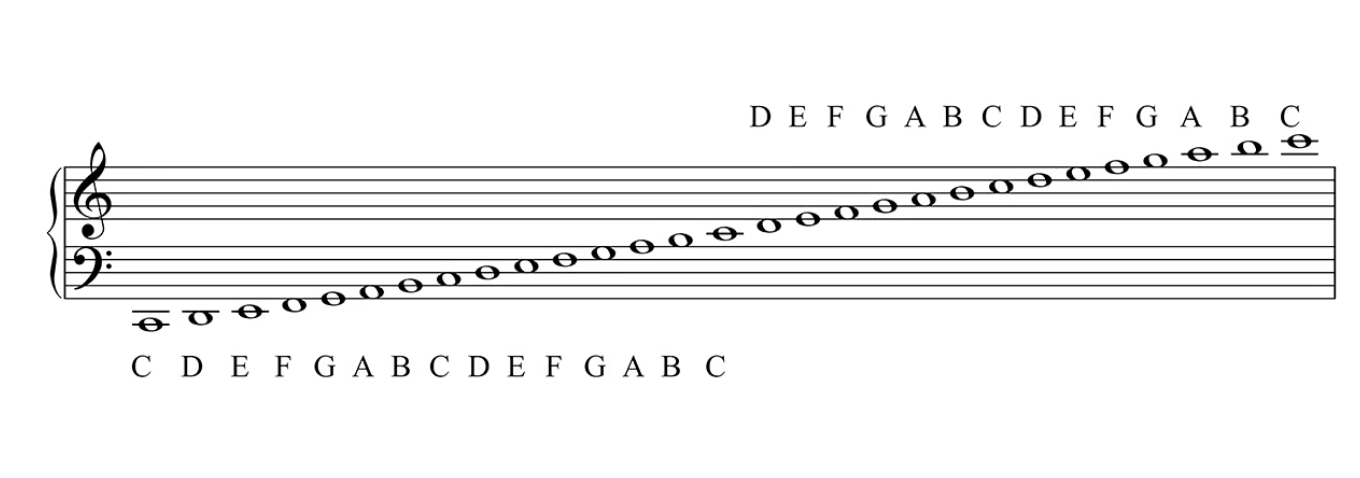
- If two staves are grouped by a brace (
{), the meeting point between these two clefs will be the first ledger line below the upper stave, and the first ledger line above the lower stave